TPU — polyurethane
Highest tensile strength in the sample
Wheels, bellows, parts that flex thousands of times and wear.
Density
1.19 g/cm³
density, ISO 1183 9 grades
Soft, but not interchangeable.
{{SALTI}}Materials › Thermoplastic elastomers (TPE, TPU)
Seals, grips, bellows, soft overmoulds: they mould like a plastic and behave like a rubber. Shore hardness remains a functional requirement and has to be met, but on its own it is not enough to choose the material: at the same hardness, TPU, TPV and styrenics can behave very differently. For seals and sealing functions you also have to assess compression set, retention of sealing force, temperature and chemical compatibility; for parts subject to wear, abrasion and tear resistance count too.
Only the density appears below, and the reason should be said plainly: on elastomer datasheets tensile strength and elongation are measured now to DIN 53504, now to ISO 37, now to ASTM D412, and values taken under different standards do not belong on the same bar. We prefer to remove the figure rather than publish one that does not hold: for the strength you need the datasheet of the grade. It remains true that for a seal which has to keep sealing over time and in heat a TPV is often the right choice, and a styrenic is the right one for a soft-touch overmould. Watch out with overmoulding: TPE only bonds to the rigid substrate if the two chemistries are compatible — check that before building the mould, not after.
Highest tensile strength in the sample
Wheels, bellows, parts that flex thousands of times and wear.
Elastic recovery, good sealing
Seals and plugs that must stay elastic over time and in heat.
Soft to the touch, easy to overmould
Grips and soft-touch overmoulds.
Grade-dependent figure: check the datasheet of the selected material.
The medians describe the datasheets included in the sample: they are not a comparison at equal hardness and they are not a ranking of suitability. Among the grades in the archive hardness ranges from 35 to 90 Shore A, so the density too should be read for what it is: the description of a heterogeneous set, not the property of one material.
Each row is the median of a selection of manufacturers’ datasheets held in our archive, with the property, the standard and the number of grades stated next to the value. These figures describe the sample: they serve to compare the levels with one another, not to size a part, and they are not a guaranteed material specification. For that you need the datasheet of the chosen grade, which we supply on request.
Where a level shows no value, the documented sample was not sufficient: we prefer to remove the figure rather than publish one that does not hold. HDT and impact strength are deliberately absent, because datasheets often do not state the test condition — whether HDT is at 1.8 or 0.45 MPa, whether the impact specimen is notched — and values collected under different conditions cannot be compared.
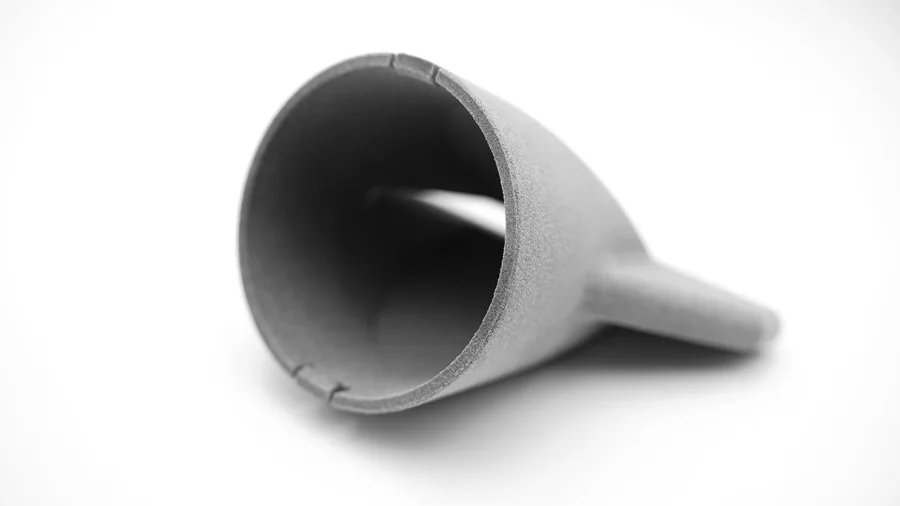
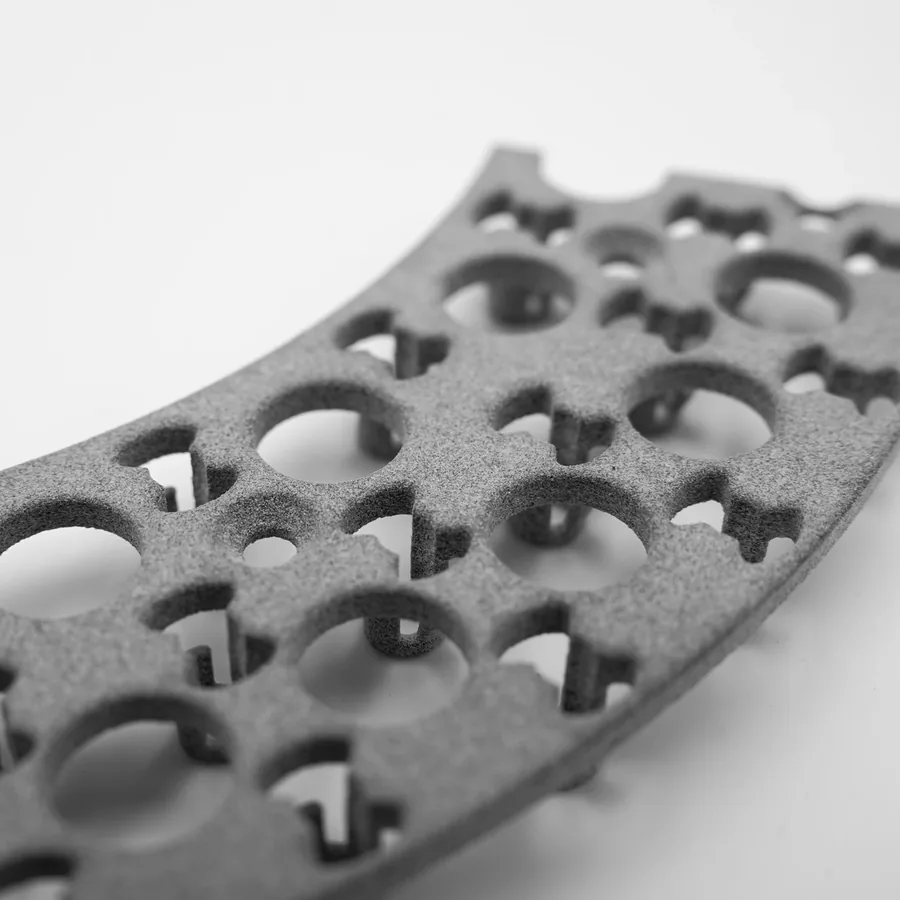
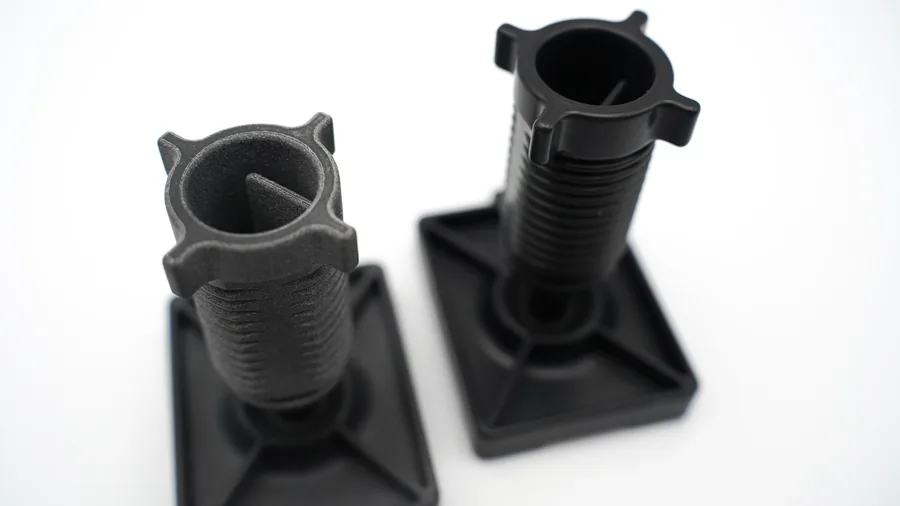
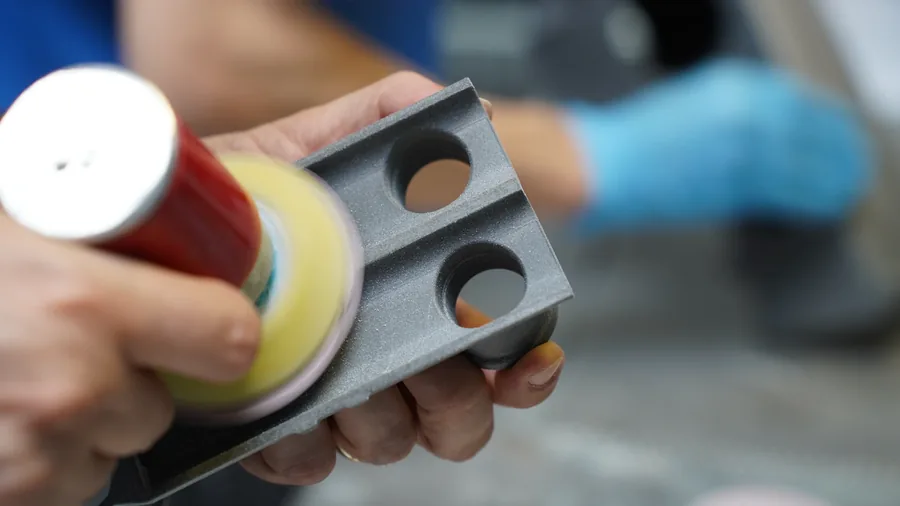
Parts that came out of our own machines: geometries that elsewhere would need moulds, finishes obtained in house.
Not sure which one to choose? You do not have to decide on your own. Upload the model: in a few minutes you have the price, the delivery times and an automatic check that warns you if something cannot be produced — before you order, not after.